Wondering whether you should buy a house in town or look for a little more elbow room outside Corning? It is a common question, especially when the local market includes everything from standard residential homes to small acreage properties and rural parcels. If you are weighing convenience against space, this guide will help you compare the real trade-offs so you can choose a property that fits your daily life. Let’s dive in.
Corning homes are not all the same
One of the biggest mistakes buyers make is treating all Corning-area listings as one market. In reality, the local inventory includes in-town houses, mobile or manufactured homes, farms and ranches, and vacant land, which can make price comparisons confusing.
As of late spring 2026, Zillow placed Corning’s average home value at $304,138 and its median list price at $348,316. At the same time, public portal searches showed a much wider spread depending on lot size, acreage, and property type. That is why it makes more sense to compare in-town homes to other in-town homes and small ranchettes to similar rural properties.
What in-town homes around Corning look like
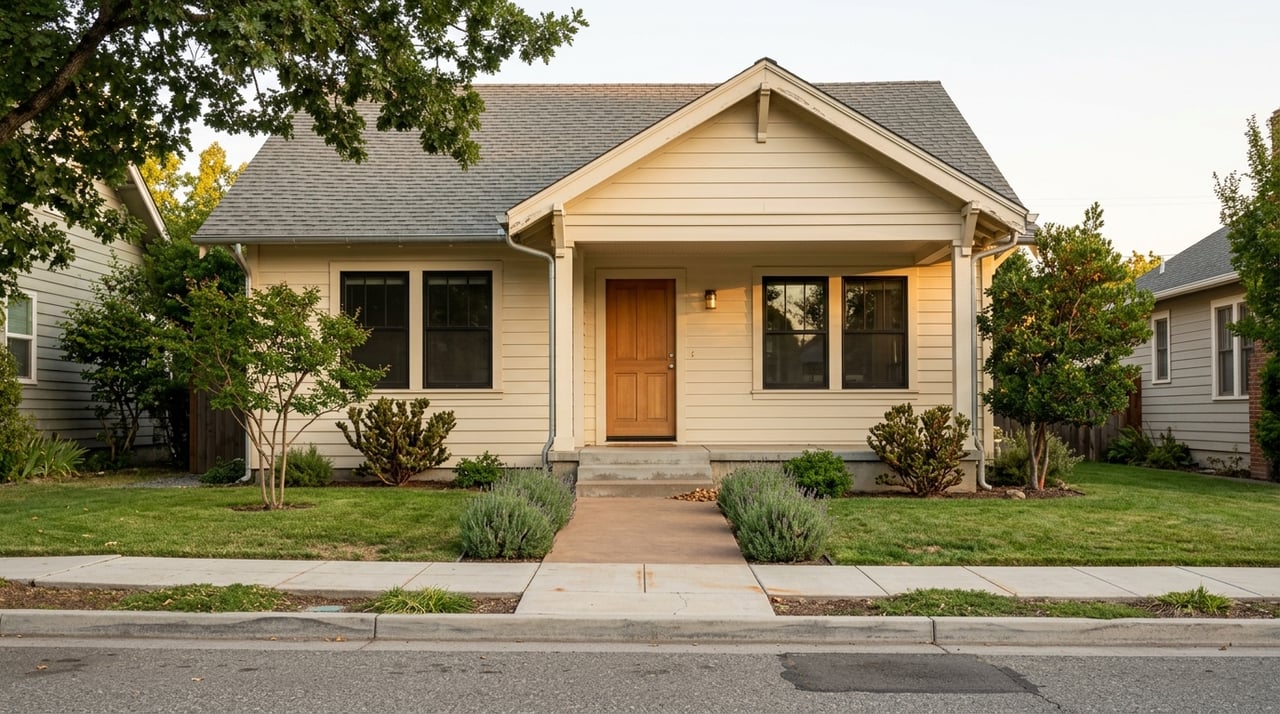
In-town homes in Corning usually sit on standard residential lots and offer a more traditional neighborhood setup. Recent public examples included homes around $275,000 to $380,000, with sizes ranging from about 1,196 to 1,953 square feet and lot sizes under 10,000 square feet.
These homes tend to appeal to buyers who want simpler upkeep and easier access to day-to-day services. You may also find a mix of housing styles, including older homes with character features, fenced yards, corner lots, and off-street parking.
Sample in-town price points
A few recent examples help show the range:
- 803 Colusa St listed at $275,000 for 3 bedrooms, 1 bath, 1,260 square feet
- 505 Marguerite Ave listed at $325,000 for 3 bedrooms, 2 baths, 1,196 square feet
- 471 Stanmar Dr listed at $380,000 for 3 bedrooms, 2 baths, 1,700 square feet
- 409 4th St listed at $370,000 for 4 bedrooms, 2.5 baths, 1,953 square feet
These examples show that in-town pricing can overlap with some small acreage properties, which is why the lifestyle side of the decision matters just as much as the price tag.
What small ranchettes around Corning look like
Small ranchettes offer a very different ownership experience. Instead of a compact city lot, you may get one acre, several acres, or even more, along with room for gardens, outbuildings, equipment, or animals depending on the property and local rules.
Recent acreage examples ranged from about $280,000 to $550,000. The land component changes the value equation quickly, so square footage alone does not tell the full story.
Sample ranchette price points
Recent public examples included:
- 15743 El Dorado Dr at $280,000 pending with 2.8 acres
- 7486 Rodger Rd at $349,999 with 1 acre
- 1880 Inghram Rd at $550,000 with 1.73 acres
- 20506 Corning Rd at $398,000 with 9.15 acres
You may also see vacant rural parcels priced far lower than improved properties. Public examples in the 1 to 3 acre range ran from roughly $5,400 to $43,000, which shows how much the presence of a home, utility setup, and usable improvements can affect price.
The biggest difference is daily ownership
If you are choosing between a home in town and a ranchette, the most important question is often not price. It is how hands-on you want to be after closing.
In Corning city limits, public works maintains city streets, sidewalks, parks, the water system, hydrants, sewer collection, storm drains, and bridges. The city also offers 24/7 emergency response for water and sewer issues within city limits, which can make ownership feel more predictable.
Outside the city, small ranchettes usually come with more private-system responsibility. Tehama County Environmental Health oversees individual sewage disposal systems, domestic wells, public water systems, small water systems, and water testing, and the county notes that septic systems and wells require office visits.
In-town convenience advantages
For many buyers, an in-town home works well because it offers:
- City water and sewer
- Fewer private utility systems to manage
- Lower land maintenance
- Faster municipal response when a water or sewer issue comes up
- Easier day-to-day logistics for errands and service calls
If you want a home that is easier to lock, leave, and maintain, town can be the better fit.
Ranchette ownership trade-offs
A small ranchette may be a better match if you want more privacy and more room to spread out. Still, that extra space often comes with extra responsibility.
You may need to manage:
- A private well or other water source
- A septic system instead of city sewer
- More land maintenance
- Defensible space needs
- Longer service response times
- Broadband or cell coverage issues in some unincorporated areas
That does not make rural living a bad choice. It simply means you should go in with clear expectations.
Zoning and animal rules matter more than many buyers expect
If your goal is a garden, animals, or a small hobby-farm setup, do not assume an in-town property will work. Corning’s municipal code says animals, poultry, and fowl other than cats or dogs are allowed only in agricultural districts unless a permit is issued.
That makes zoning and land use a major part of the decision. A home with a big yard in town may still not fit your long-term plans if you want livestock, extra structures, or equipment storage.
Commute and convenience are different in town and country
Another key difference is how you will move through your week. In-town Corning gives you closer access to local stops, services, and shorter errand runs.
Tehama County’s housing element notes that Corning has higher transit connectivity than the county overall because local transit is concentrated in urban areas. TRAX Route 5 operates solely in Corning and stops at places including City Hall, the Senior Center, and other commercial or residential sites.
In-town living often simplifies errands
If you want easier access to basic services, town living has a clear edge. You are more likely to benefit from shorter drives and at least some public transit support.
That can matter if your schedule is busy or if you simply prefer a home base that keeps daily tasks straightforward.
Rural living usually means more driving
Rural buyers often accept more drive time in exchange for privacy and space. The county says residents who work outside Tehama County often commute to places like Shasta County, Butte County, or Chico, and the Rancho Tehama Express connects Red Bluff and Rancho Tehama Reserve.
For many ranchette buyers, that means your car is part of the property decision. Internet access, package delivery, and service scheduling can also feel different when you live farther out.
Rancho Tehama Reserve is its own kind of rural choice
Rancho Tehama Reserve often comes up when buyers start looking for hobby-farm style properties near Corning. The community describes itself as about 11 square miles of remote rural living with large lots and amenities such as a country store, gas station, recreation hall, park, playground, airstrip, volunteer fire department, and post office.
That said, rural does not always mean no community structure. One recent lot listing there included a $75 monthly HOA fee, which is a good reminder to ask about dues, rules, and subdivision requirements before you buy.
Fire hazard and connectivity should be part of your checklist
These are two topics that can change your ownership experience fast. Tehama County’s planning documents note that large portions of unincorporated areas, including Rancho Tehama Reserve, are in Very High Fire Hazard Severity Zones, while Corning city is not in any fire hazard severity zone.
The county also reports that unincorporated areas struggle with cell signal access and that 14.2 percent of households are unserved and 6.7 percent are underserved by sufficient broadband. If you work from home, stream often, or rely on strong mobile service, this deserves extra attention.
Which option fits you best?
There is no one-size-fits-all answer in the Corning area. The right choice depends on how you live, what you plan to do with the property, and how much maintenance you are comfortable handling.
An in-town Corning home may fit you best if you want
- Standard residential living
- City water and sewer
- Easier maintenance
- Faster utility response
- Shorter local errand runs
- A property that does not need acreage-level upkeep
A small ranchette may fit you best if you want
- More privacy
- Space for a garden or outbuildings
- Room for animals where allowed
- Flexibility for rural living goals
- Land that offers future expansion potential
- A property type that feels less compact than a city lot
Five smart questions to ask before you buy
Whether you are leaning toward town or country, these questions can save you time and help you avoid surprises:
- Is the water source city, well, or mutual?
- Is the wastewater system city sewer or septic?
- What zoning and animal rules apply?
- Is the property in a fire hazard or flood zone?
- Is broadband and cell service adequate for your needs?
These details often shape your real cost, convenience, and long-term satisfaction more than a listing photo ever will.
If you are comparing in-town homes and small ranchettes around Corning, it helps to work with someone who understands both sides of the market. For local guidance on town properties, acreage, and what fits your goals best, reach out to Lori Slade.
FAQs
What is the main difference between an in-town home and a ranchette around Corning?
- The biggest difference is usually daily ownership. In-town homes often have city water and sewer with simpler upkeep, while ranchettes usually involve more land, more privacy, and more hands-on management of systems like wells and septic.
Are small ranchettes around Corning always more expensive than in-town homes?
- No. Recent examples show overlap in pricing. Some small acreage properties were listed near the same range as in-town homes, so value depends on land size, improvements, utilities, and location.
Can you keep animals at an in-town Corning property?
- Not always. Corning’s municipal code says animals, poultry, and fowl other than cats or dogs are allowed only in agricultural districts unless a permit is issued.
What utilities should you check before buying a rural property near Corning?
- Focus on the water source, wastewater system, broadband availability, cell coverage, and whether the property relies on private systems such as a well or septic.
Is Rancho Tehama Reserve considered a rural option near Corning?
- Yes. Rancho Tehama Reserve is described as remote rural living with large lots, though some properties may still come with community rules or costs like HOA fees.
Why does comparing Corning home prices get confusing?
- Corning-area listings include many property types, such as standard houses, manufactured homes, land, and farms or ranches. Comparing similar property types gives you a clearer picture than relying on one broad median number.