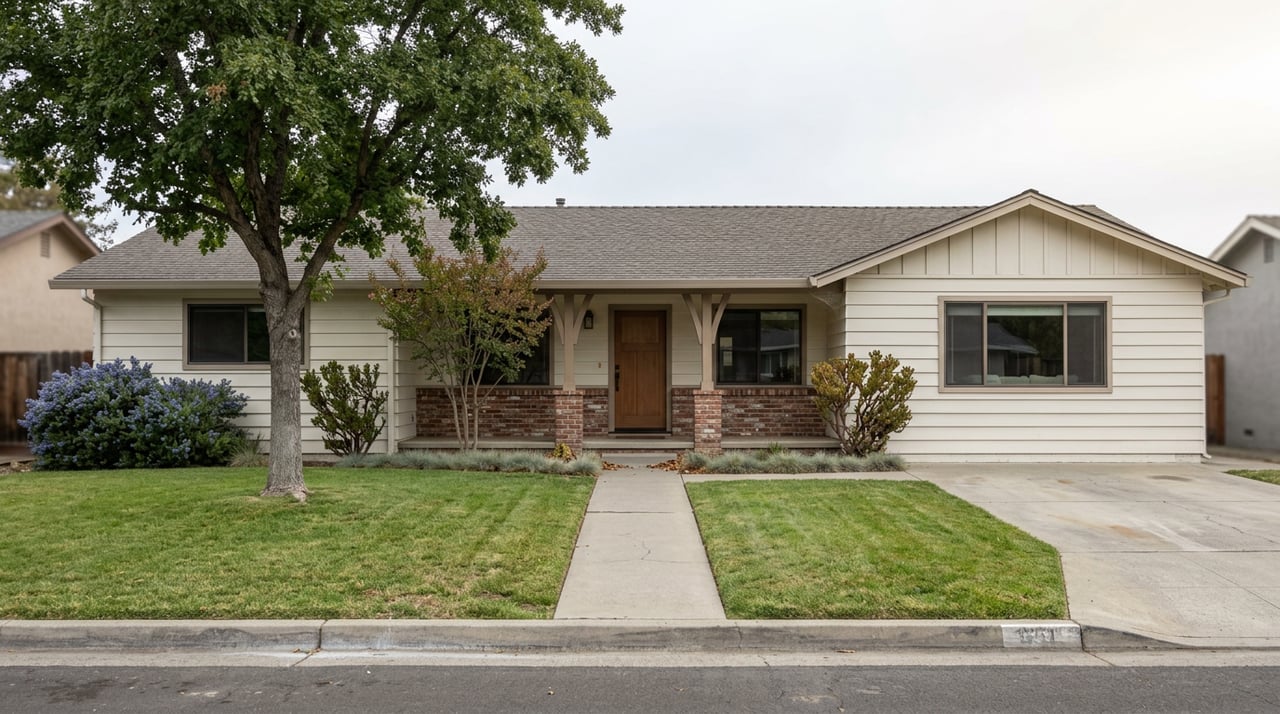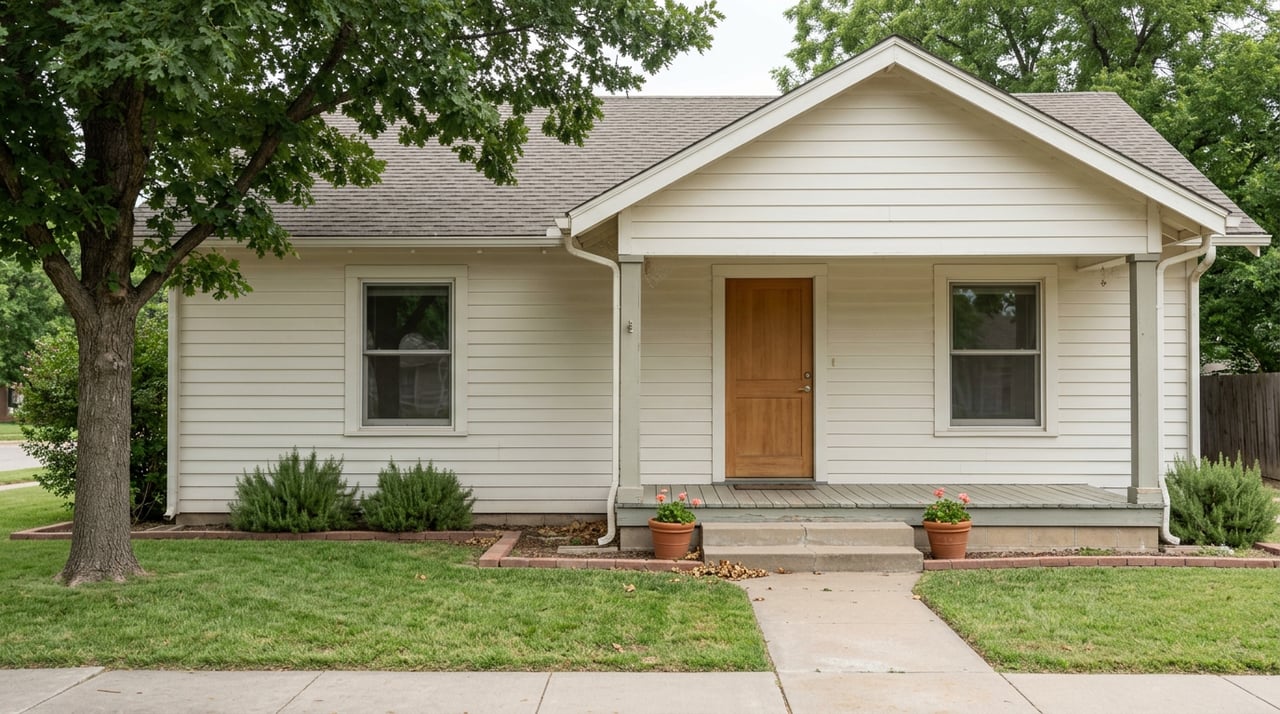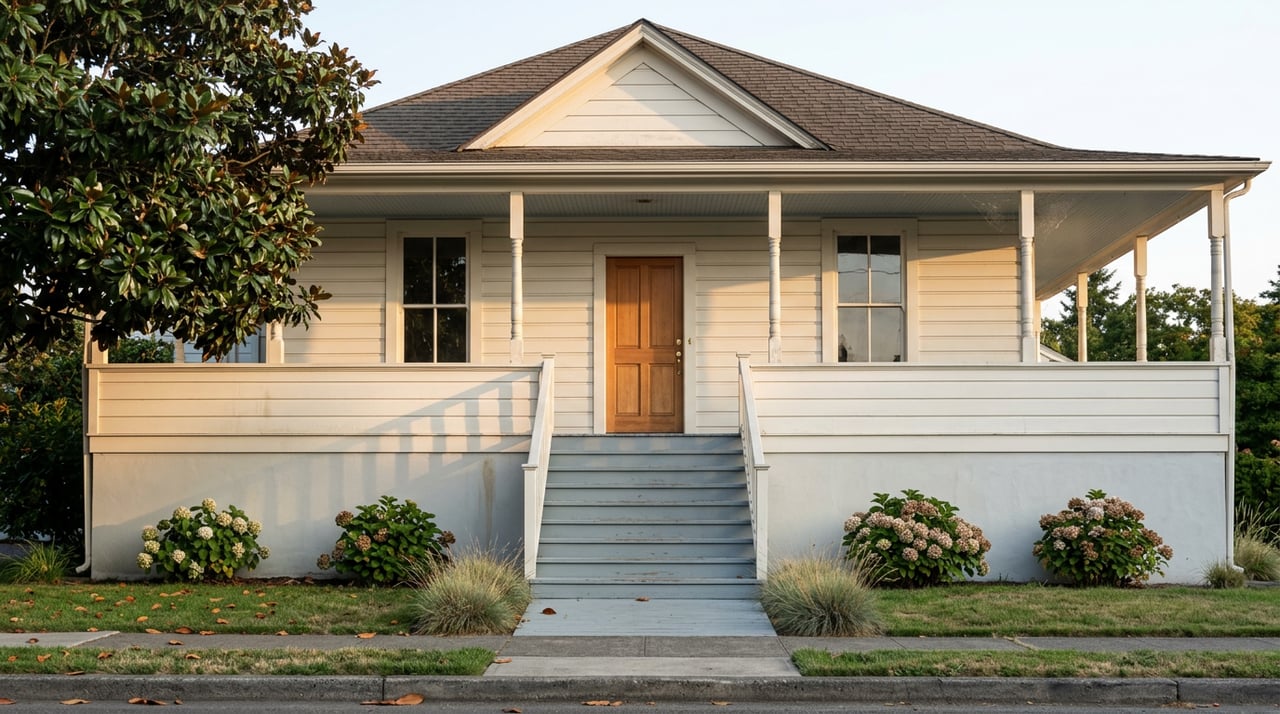
Walk down C Street on a quiet afternoon and you will notice it before you can name it. The houses do not sit low to the ground the way most small-town homes do. They rise. Some by three feet, some by five, with a run of wooden or concrete steps climbing up to a porch before you ever reach the front door. It reads at first like a stylistic flourish, something a builder did for looks. It is not decoration. It is the town telling you exactly what it has always known about itself.
Tehama's name most likely comes from a Wintun word meaning "high water." Whether it originally meant that or something closer to "low land" or "shallow," every plausible translation points back to the same thing: this stretch of the Sacramento River bank has always had a complicated relationship with water. The houses did not get built tall by accident. They got built tall because the town that raised them has spent a century and a half learning, sometimes the hard way, that it floods first.
The Town That Was Almost The Capital
It is easy to assume a town this size, with a population sitting around 439 people today, was always this quiet. It was not. Robert Hasty Thomes founded Tehama in 1850 after arriving in the region in 1844 with a Mexican land grant, and for a stretch of the 1800s this was the place, not Red Bluff. Tehama was the last stop for riverboats coming up the Sacramento, and when the county formed in 1856, Tehama became the county seat. By the 1890s the population had climbed to roughly 2,000, nearly five times what it is today.
Then two things happened close together. Riverboats started pushing farther upstream, and trade shifted north to Red Bluff. A fire in 1908 tore through what was left of the commercial core. Between the receding river traffic and the fire, Tehama never rebuilt back to its 1890s size. The city was incorporated in 1906, right as its momentum was already breaking, which is its own small irony: official cityhood arriving just as the boom it might have been built to manage was ending.
That history explains the scale of the town today, but it does not fully explain the staircases. For that you need the flood record.
A Building Code That Outlasted The Threat It Was Built For
Tehama is generally the first place in the county to flood when the rains come. That has been true for so long that it eventually got written into how the town builds. By city ordinance, homes in Tehama are required to be raised above flood level, which is why so many of the older houses have that unmistakable look: a full story of open air or crawlspace underneath, then a long run of stairs up to the porch.
What makes this interesting is not just that the rule exists. It is that the rule is still in force even though the original threat has been substantially tamed. Flooding in Tehama is now controlled by releases from Shasta Dam upstream, which means the town no longer floods the way it did when those tall foundations first became standard practice. The ordinance did not get relaxed once the dam went in. The town kept building the way it always had, because the underlying geography, low ground on a bend of a river prone to high water, never actually changed. Only the frequency of the consequence did.
So the next time you drive past one of those homes with the long front stairway, you are not looking at a preserved architectural trend. You are looking at a live building requirement, still on the books, still shaping new construction in a town whose entire name may translate to a description of the water problem it has never fully solved.
Where That History Actually Lives
If you want the fuller version of that story, told with the artifacts to back it up, it is sitting at the corner of C and Third Street. The Tehama County Museum is housed in a Masonic Hall built in 1859, now listed on the National Register of Historic Places, which makes the building itself one of the museum's own best exhibits. Inside are more than 3,000 relics along with photographs and documents tracing the county back through its riverboat era, its Native American history, and its agricultural roots.
The museum is small by design. It runs almost entirely on volunteers, docents, an archivist, and board members, with only a part-time office manager and custodian on the books. It draws somewhere between 750 and 1,000 visitors a year, which for a town of 439 people means most of its audience is coming from somewhere else in the county, or beyond it, specifically to see this collection. Weekend hours this season run Saturdays from 1 to 4 p.m., with a rotating lecture series that has covered ground you would not expect from a museum this size. This year alone the calendar has included a talk on Glenn Miller and swing-era music from historian Brian Peterson, a session on Yana and Yahi history in Northern California from Greg White, and an Inupiaq storytelling presentation from Avery Vilche.
None of that history exists by accident either. The same flood record that shaped Tehama's houses is a big part of why the county needed a dedicated place to hold onto its past in the first place. A town that lost its commercial center to fire and its trade prominence to a receding river has fewer original buildings left standing than most, which makes the ones that survived, including the Masonic Hall itself, worth protecting deliberately rather than assuming they will just persist.
What's Actually On The Calendar This Fall
The clearest reason to go see all this in person is coming up fast. On Saturday, September 12, from 10 a.m. to 2 p.m., the museum hosts its 44th Annual History Keepers and Seekers Rendezvous, its biggest fundraiser of the year. This year's theme leans into the layered coincidence of the calendar: 250 years of American history, Tehama County's 170th birthday, and Red Bluff's 150th, all landing in the same season.
What to expect if you go:
- Multiple vendor and history booths spread across the museum grounds
- Live music running through the afternoon
- Food and raffles supporting the museum's year-round operating costs
- Free admission, with donations accepted at the door
It is a low-key event by design, more county fair in miniature than formal exhibition, which fits a museum that has always run on volunteer hours rather than grant money. If you have lived in Tehama for years and never made it inside the old Masonic Hall, this is the easiest version of that visit: no appointment needed, no formal tour required, just a Saturday with the doors open and the people who know this history best standing around ready to talk about it.
The Short Version
Tehama looks the way it does because of water, not style. The staircases climbing up to old front porches are a building code responding to a flood record that predates the dam that now controls it. The town's size today traces back to a river that moved its trade north and a fire that took what was left. And the museum sitting at C and Third Street exists specifically because a town that lost this much of its physical history decided, in 1980, that it was not going to lose the rest of it.
None of that is the kind of thing you pick up from a drive-through. It is the kind of thing you notice once, ask about, and then can never not see again every time you pass one of those raised front porches on your way through town.
If you are curious what a property with that kind of history and that kind of foundation requirement is actually worth, or what it takes to buy or sell in a town where the building code has its own backstory, Tehama County Real Estate has spent decades working exactly this stretch of the county. Reach out for a free home valuation and a conversation grounded in what this market, and this town's history, actually looks like up close.